Blog Categories
Carlo Petrini RIP
Born in 1949 in the town of Bra, in Piedmont, Carlo Petrini was a gastronome, journalist, writer, and a tireless advocate for a food system that is both sustainable and just.
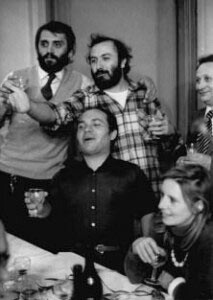
On July 26, 1986, Arcigola was founded (later SlowFood Italy), an experience that quickly spread across the country and beyond. On December 9, 1989, in Paris, the Slow Food Manifesto was signed by more than twenty delegations from around the world, and Petrini was elected president—a role he held until 2022. Thanks to his far-sighted vision, Petrini played a decisive role in the development of Slow Food, inventing and promoting its projects, which have now acquired great international visibility.
From the outset, Petrini played a decisive role in shaping Slow Food not simply as an organization, but as a movement. Over the years he articulated its guiding philosophy—food that is “good, clean and fair”— as a unifying framework capable of bridging cultures and geographies. This principle became the foundation for a new way of understanding food: not merely as nourishment, but as a matter of environmental sustainability, cultural identity, and social justice. Under his leadership, Slow Food evolved from a small group of friends in the Italian countryside in the 1980s into an internationally renowned global network active in more than 160 countries. Petrini was instrumental in developing key initiatives that transformed the movement’s vision into concrete action. Among these, the organisation of Terra Madre in 2004 stands out as a milestone: a gathering of food communities bringing together farmers, fishers, artisans, chefs, and academics, giving voice to those often marginalized in the global food system.
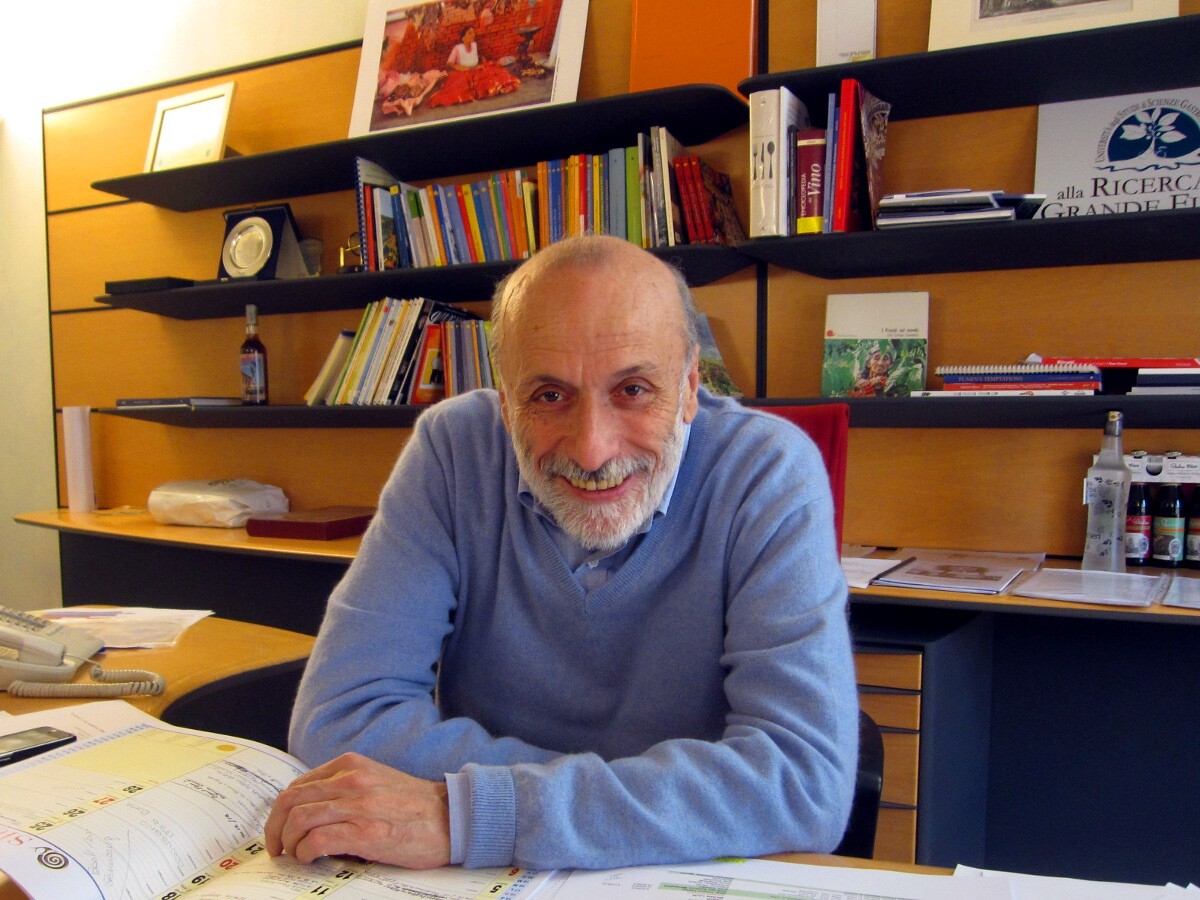
Terra Madre has continued to be the beating heart of Slow Food ever since, enabling the movement to spread far and wide in more than 160 countries. Among his many achievements is the creation of the University of Gastronomic Sciences (Pollenzo, Italy), the first academic institution to offer an interdisciplinary approach to food studies. Petrini gave food an increasingly prominent role within the academic world. This, too, was a forward-thinking endeavor, culminating in 2017 when the Italian government established the Bachelor’s Degree Program in Gastronomic Sciences, paving the way for the academic—and broader—recognition of the role of the gastronome: a professional who studies food through its cultural, historical, socio-economic, and environmental processes. Since its founding, the University of Gastronomic Sciences has trained approximately 4,000 gastronomes from 100 countries. Furthermore, together with the Bishop of Verona, Monsignor Domenico Pompili, in 2017 he founded the Laudato Si’ Communities, a network of approximately 80 local groups that, by bringing together people of all faiths united by a love for our common home, operate in full harmony with the message of Pope Francis’s encyclical of the same name. As a journalist Carlo Petrini regularly contributed to La Stampa, La Repubblica, Il Manifesto, Il Fatto Quotidiano, some of Italy’s largest daily newspapers, discussing themes such as sustainable development, culture, gastronomy, and the relationship between food and the environment. All revenue from journalistic activities was reinvested in Slow Food and UniSG projects. Over the years, Carlo Petrini shared his vision through a series of influential books that helped bring the principles of Slow Food to a global audience. Beginning with The Reasons for Taste (2001), his work consistently explored the cultural, social, and environmental dimensions of food. In Slow Food Revolution (2005), co-written with journalist Gigi Padovani, he recounted the origins and growth of the movement, while Good, Clean, and Fair: Principles of a New Gastronomy (2005) laid out the foundations of “eco-gastronomy” — a concept that resonated worldwide and was translated into numerous languages. His later works further developed these ideas, connecting food with broader global challenges. In Terra Madre: How Not to Let Food Eat Us (2009) and Food and Freedom (2013), Petrini showed how food could empower communities and address issues such as hunger, inequality, and cultural homogenization. Through Loving the Earth (2014), he engaged in dialogue with thinkers from different fields to reflect on the future of the planet, while his work on Pope Francis’s encyclical Laudato Si’ highlighted the deep links between food, ecology, and ethics. This dialogue continued in Terrafutura (2020), where Petrini and Pope Francis reflected together on the urgent challenges of their time. More recently, in A Taste for Change (2023), he explored the idea of the ecological transition as a pathway to a more just and fulfilling society, in conversation with economist Gaël Giraud. Petrini’s contribution to the discussion on the sustainability of food and agriculture in relation to gastronomy has been acknowledged by the academic world. In 2003, the Istituto Universitario Suor Orsola Benincasa of Naples conferred on him an honorary degree in Cultural Anthropology, and in May 2006 he received an honorary degree in Human Letters from the University of New Hampshire (USA) for his achievements as a ‘revolutionary precursor [and] founder of the University of Gastronomic Sciences’. Petrini’s work was further recognised by the University of Palermo in 2008, when he was awarded an honorary degree in Agricultural Sciences and Technologies. In 2014, he received an honorary degree in Comparative Law, Economics, and Finance from the International University College in Turin. In May 2023, the American University of Rome (AUR) awarded Carlo Petrini an honorary doctorate in recognition of his impact on Italian life and culture. Meanwhile, in 2025, the University of Messina awarded him an honorary doctorate in the Humanities. Carlo Petrini traveled around the world taking part in conferences, meeting Slow Food communities, holding lectures in renowned universities including Ivy League institutions, and was invited to take part in discussions on food sustainability and agriculture within EU institutions and the FAO (Food and Agriculture Organization of the United Nations).
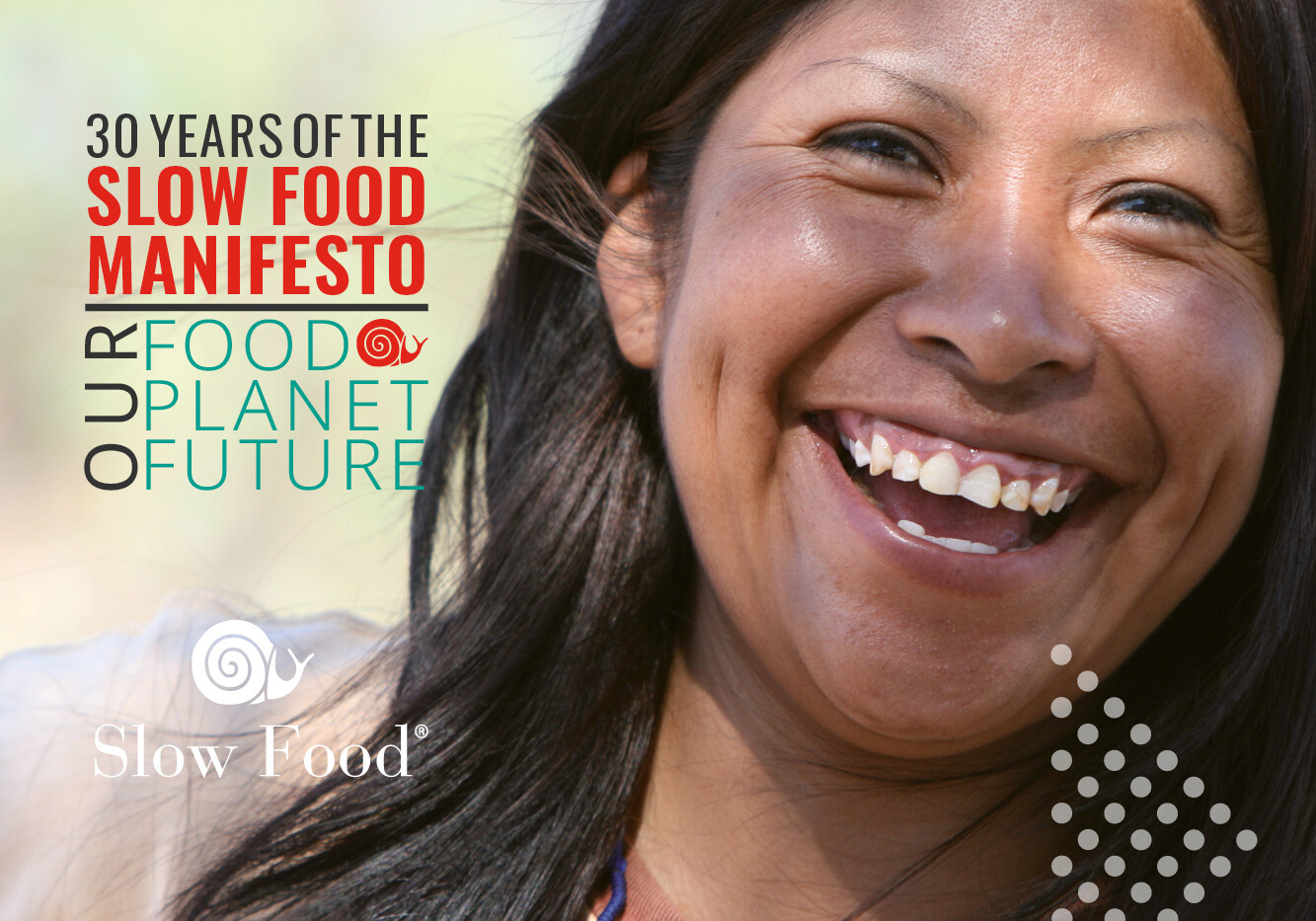
His outstanding contributions in the field of the environment and sustainable development work have also been recognized by the United Nations. In 2012, Slow Food President Carlo Petrini took the floor at the UN Permanent Forum on Indigenous Issues in New York. The same year, at the UN Conference on Sustainable Development Rio+20 in Brazil, he spoke at the Global Food Security and Nutrition Dialogue. The United Nations Environment Programme named him Co-Winner of the 2013 Champion of the Earth Award for “Inspiration and Action”. In 2016 Carlo Petrini was named FAO Special Ambassador to Zero Hunger for Europe. Petrini’s and Slow Food’s commitment thus took shape in the social and environmental spheres, keeping these two dimensions closely interconnected: it has become increasingly clear how the well-being of individuals depends on the health of the planet—its ecosystems and food systems—and, conversely, how greater citizen awareness can influence purchasing choices, favoring products that pay close attention to workers’ rights, consumer health, and the protection of biodiversity. In this regard, several important projects developed by Slow Food have been milestones, including the Gardens in Africa, the Ark of Taste and the Slow Food Presidia. His skills as a communicator and the originality and importance of his message, implemented through Slow Food projects around the world, aroused the interest of international opinion leaders and media. In 2004 he was named a ‘European Hero’ by Time magazine, and in January 2008 he was the only Italian to appear in the list of ‘50 People Who Could Save the World’ drawn up by the prestigious British newspaper The Guardian. On July 16, 2022, the 8th International Congress of Slow Food began a new phase of regeneration, which was strongly supported by its founder. Congress delegates elected new global leaders to guide Slow Food into the future. In the words of Carlo Petrini: “The role of food as the main culprit in environmental disaster is emerging ever more loudly and clearly. Our movement, which has been working for 30 years to ensure good, clean and fair food, must have the courage to take a leading political role in curbing this trend, which has catastrophic implications. We need governance that leaves space for new generations. We must be able to combine the new with our history. The path taken so far has allowed us to achieve goals that once seemed unattainable and has made us what we are. However, today’s world is profoundly different from the one that saw the beginnings of our movement. We must therefore welcome and allow ourselves to be directed by the creativity and intuition of new individuals capable of interpreting the present and outlining the trajectory that will allow the achievement of future goals.” Edward Mukiibi, better known as Edie, took up the baton. Elected Slow Food’s new president, Edie was born in 1986 in Uganda into a farming family, the same year the Slow Food movement was started at Rome’s Spanish Steps in protest against the opening of a McDonald’s. Since then, Carlo Petrini continued to serve in the Board of Directors of Slow Food and as President of the University of Gastronomic Sciences. Carlo Petrini was one of the most influential voices in redefining food as a tool for environmental sustainability, cultural preservation, and social change.
“…good, clean and fair food for all.”
If you need more information on your local Slow Food Presidium
please feel free to ask me: william@worldwineconsultants.com
– May 2026 –